
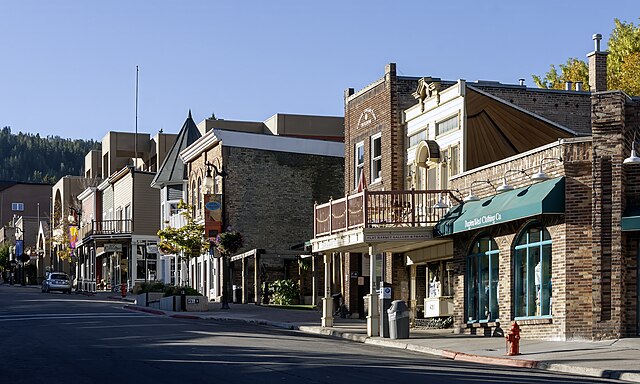
Park City, Utah is a majestic, highly desirable destination that draws travelers from all over the world. Naturally, this makes Park City a lucrative location for residential Airbnbs and rental home investments, and for owners looking for significant tax savings, it's a ripe opportunity for a cost segregation study.
While the actual structure of the building depreciates over 39 years, a Park City rental or Airbnb is full of smaller assets within the property that depreciate far sooner than 27.5 or 39 years. The purpose of a cost segregation study is to place those assets into shorter-lived classes, putting them in "buckets" that depreciate faster. The two most common classes are 5-Year Property and 15-Year Property. This allows you to take more depreciation upfront than you'd otherwise be able to.
The best news? Under the One, Big, Beautiful Bill, 100% bonus depreciation is back for qualified property acquired and placed in service after Jan. 19, 2025 (elections and transition rules may apply), and it continues at 100% for 2026. That means your portion of 5- and 15-Year Property can now be fully depreciated in Year 1, which can mean massive savings for the 2025 and 2026 tax seasons.
What If You Bought Your Property Before 2025?
How much bonus depreciation would you be eligible for? It depends on the day and year you bought the property and began operating it as a rental or Airbnb. Properties placed in service in 2024 can claim 60% bonus depreciation; 2023 properties get 80%. Feel free to reach out if you have questions about how much bonus depreciation your property would qualify for.
Example: Cost Segregation Study for a Park City Rental
What might a cost segregation study for a rental in Park City look like? It's similar to what it would be for one in Lake Tahoe. See our Lake Tahoe Airbnb cost segregation example.
Let's assume the property costs $2.4 million and the land is assessed at $1.1 million. The depreciable basis becomes $1.3 million. The study finds and itemizes $156,000 of 5-Year Property and $182,000 of land improvements (15-Year Property).
Study Results
- Total Cost: $2,400,000
- Land Value: $1,100,000
- Depreciable Basis: $1,300,000
- 5- and 15-Year Property: $338,000
If the property was acquired and placed in service in February 2025 (after Jan. 19, 2025), it may qualify for 100% bonus depreciation. That means you can depreciate 100% of the 5- and 15-Year Property ($338,000) in Year 1, for tremendous tax savings in 2025 (subject to elections and your tax advisor's guidance).
In addition to the standard depreciation on the structure itself, you'd be looking at approximately $372,378 in total depreciation for Year 1. With a federal tax rate of 32%, that could add up to as much as $119,161 in tax savings.
How Does This Depreciation Offset Your Taxes?
According to the IRS, passive losses can offset passive income. The rent you collect passively? Perfect for the depreciation a cost segregation study brings. However, non-passive income (such as W-2 income) generally cannot be offset by these losses.
That all changes if you or your spouse qualifies as a Real Estate Professional. In that case, your W-2 income (or your spouse's) can be offset by the cost seg losses. This is one of the golden tickets in real estate, maximizing the impact a cost segregation study can have.
Planning Matters
This is one of many examples of how impactful a cost segregation study can be for a residential rental home or Airbnb. The same can be said for residential duplexes, apartment complexes, or any other revenue-generating residential property. The most important thing to consider is what you plan to do with your savings, and that's where it's critical to consult with your accountant.
A cost segregation study is only as good as the plan you have for the savings afterward.
Have Questions?
If you have any questions about cost segs and whether one makes sense for your situation, feel free to reach out for a free, quick consultation. We'd love to meet you!